What Can Tesla Optimus Do
Imagine a humanoid robot helping out in a factory, moving materials, handling objects or taking over repetitive tasks. That's the kind of future Tesla is working toward with Optimus.
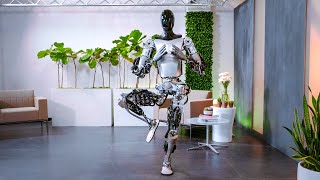
Unlike traditional industrial robots, which are often designed for specific jobs, Optimus is being developed as a general-purpose humanoid. Its two-legged design and robotic arms are intended to help it operate in environments originally designed for people.
Tesla's initial focus includes industrial applications, particularly tasks that are repetitive, physically demanding or potentially unsafe. The company's longer-term vision goes further, with humanoid robots potentially assisting with a much wider range of everyday activities.
However, there's an important distinction between what Optimus is designed to do and what it can reliably accomplish today.
While Tesla has demonstrated capabilities using earlier Optimus prototypes, dependable autonomous operation across a wide variety of real-world tasks remains under development. The latest Gen 3 programme is a step toward that goal, rather than a finished general-purpose robotic worker.
What's Special About Optimus Gen 3
Optimus has evolved considerably since Tesla began demonstrating working humanoid prototypes.
The second-generation Optimus, introduced in December 2023, showcased improvements in walking, balance and object handling. Tesla subsequently developed an intermediate version, referred to as Gen 2.5, before announcing plans for Gen 3.
One of the most important areas of development is the robot's hands. Tesla has identified a new hand design as a major part of Gen 3, reflecting the importance of dexterity when handling objects and interacting with everyday environments.
But Gen 3 is about more than robotic movements.
Tesla describes it as the first Optimus design intended for mass production. This represents an important change in focus: developing a robot that can eventually be manufactured at scale, rather than producing small numbers of experimental prototypes.
The company is continuing to refine the hardware, software and manufacturing process. Full technical specifications and verified performance measurements for Gen 3 have not yet been released publicly.
Development Progress and Availability
Tesla Optimus has made an important move toward production, but it isn't a commercially available humanoid robot just yet.
In October 2026, Tesla announced that Optimus production had begun on its high-volume manufacturing lines in Fremont, California. According to the company, these were its first production-quality robots, although the production ramp was still at an early stage.
Tesla is also developing a separate Optimus manufacturing facility in Texas.
The first robots are intended to support further development, including collecting training data through Tesla's Optimus Academy. This is particularly important because a general-purpose humanoid needs to learn how to handle a wide variety of objects, movements and real-world situations.
During Tesla's October 2026 earnings call, Elon Musk said he expected deliveries to companies outside Tesla around the end of 2027. However, this remains a forecast rather than a confirmed release date.
For now, Optimus remains an evolving robotics project. Its commercial pricing, complete Gen 3 specifications and general public availability have not been officially announced.
What's Next? Tesla Optimus Gen 4 and the Future of Mass Production
Tesla is already looking beyond Optimus Gen 3, with plans for an even more ambitious fourth-generation humanoid robot.
During Tesla's July 2026 earnings call, Elon Musk confirmed that Optimus Gen 4 is planned to be manufactured in Austin, Texas. A major focus will be bringing more of the manufacturing process in-house, including potentially producing more of the robot's electronic circuit boards within Tesla's own facilities.
The company's ambitions are enormous. Musk discussed an aspirational production target of 10 million Optimus Gen 4 robots per year, compared with a target of one million annually for Gen 3. However, these are long-term goals, not current production figures, and Musk acknowledged the difficulty of scaling manufacturing to such levels.
For now, Gen 4 remains a future-generation project. Tesla has not publicly released its complete technical specifications, demonstrated a finished Gen 4 robot, or confirmed when it will become commercially available.
If Tesla achieves its ambitions, Gen 4 could represent a major step toward making general-purpose humanoid robots available on a much larger scale.
 Research
 Industrial
 Consumer
 Social
 Service
 Assistive
 Medical & Healthcare
 Emergency Response
 Building & Construction
 Other Infrastructure
 Transport
 Arts & Entertainment
 Agriculture & Forestry
 Law & Order / Security
 Other

 Tesla




 Multi/General-Purpose Robots
 View All
 Linkedin
 in Sydney, Australia.
Share