What Makes the CL Series Special
The CL Series combines Kawasaki’s industrial automation experience with collaborative robot technology developed through its partnership with NEURA Robotics. The established models use integrated 24-bit encoders, aluminium construction, internal cable routing and an IP66-protected arm. This gives the series a more industrial-style design than many lightweight cobots while retaining collaborative features such as hand guidance, collision detection and configurable safety limits.
Programming is handled through a touchscreen interface with graphical tools and 3D visualisation. Operators can also guide the arm in Zero-G mode and record a path manually. The controller supports common industrial interfaces, helping integrators connect the cobot to tools, sensors, machines and other equipment.
Applications
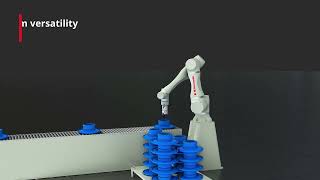
The CL Series is intended for general industrial automation, especially repetitive work where flexibility, accuracy and easier programming are valuable. Kawasaki lists assembling, sealing, handling and machine tending among its application examples. The company has also demonstrated CL cobots in welding cells, end-forming machine-tending systems and collaborative production displays.
The four established models allow users to balance payload, reach and installation size. The compact CL103N and CL105N suit lighter work close to the robot, while the CL108N provides the longest reach in the original lineup. The CL110N carries the highest payload among the established models.
The announced heavy-payload models broaden the series toward heavier handling and palletizing. Kawasaki demonstrated the 25 kg CL125N in a palletizing application and has positioned the 30 kg CL130L for heavy collaborative work in industries such as automotive and aerospace. However, each deployment still requires a complete safety assessment, particularly for sharp tools, welding equipment, heavy workpieces or high-speed movement.
Model Comparison
Model: CL103N
Payload: 3 kg | Reach: 590 mm | Robot Weight: 18 kg | Repeatability: ±0.02 mm | Base Footprint: Ø156 mm
Best suited by size and capacity for: Compact assembly, very light material handling, benchtop automation and small machine-tending cells.
Model: CL105N
Payload: 5 kg | Reach: 800 mm | Robot Weight: 26 kg | Repeatability: ±0.02 mm | Base Footprint: Ø156 mm
Best suited by size and capacity for: Light assembly, component handling, testing, sealing and machine loading where more reach is needed than the CL103N provides.
Model: CL108N
Payload: 8 kg | Reach: 1,300 mm | Robot Weight: 48 kg | Repeatability: ±0.02 mm | Base Footprint: Ø200 mm
Best suited by size and capacity for: Long-reach material handling, machine tending, welding and applications requiring access across a larger work area.
Model: CL110N
Payload: 10 kg | Reach: 1,000 mm | Robot Weight: 45 kg | Repeatability: ±0.02 mm | Base Footprint: Ø200 mm
Best suited by size and capacity for: Heavier workpieces, larger end-of-arm tooling, welding and medium-payload handling where payload is more important than maximum reach.
Announced heavy-payload models
Model: CL115N
Payload: 15 kg | Reach: 1,600 mm
Intended positioning: Medium-to-heavy handling, machine tending, welding and collaborative palletizing.
Model: CL125N
Payload: 25 kg | Reach: 1,800 mm
Intended positioning: Long-reach palletizing, packaging and heavier material-handling applications.
Model: CL130N
Payload: 30 kg | Reach: 1,300 mm
Intended positioning: Heavy components or tooling where high payload is required within a moderately sized work area.
Model: CL130L
Payload: 30 kg | Reach: 1,800 mm
Intended positioning: The highest combination of payload and reach in the announced CL lineup, aimed at heavy handling, palletizing and large-part applications.
 Research
  Industrial
  Consumer
  Social
  Service
  Assistive
  Medical & Healthcare
  Emergency Response
  Building & Construction
  Other Infrastructure
  Transport
  Arts & Entertainment
  Agriculture & Forestry
  Law & Order / Security
  Other
Other 
 Kawasaki Robotics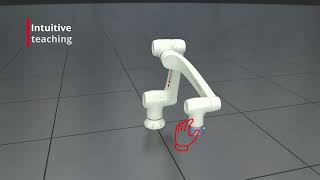


 Multi/General-Purpose Robots
  View All
  Linkedin
 in Sydney, Australia.
Share