A Cobot Family for Different Automation Needs
Rather than building LARA around a single payload class, NEURA offers a wide range of configurations. The smallest LARA 3 carries 3 kg with a 590 mm reach, while the largest models handle up to 30 kg and the longest-reaching versions extend to 1,800 mm. This makes it possible to stay within the same LARA platform while choosing substantially different payload and workspace characteristics.
The smaller LARA 3, 5, 8 and 10 models also combine IP66 protection with ±0.02 mm repeatability, while the higher-payload LARA 15 through 30L models trade some repeatability and environmental protection for substantially greater load capacity and reach. All versions retain the same basic six-axis collaborative architecture and can be mounted in any orientation.
Applications and Integration
LARA is intended primarily for industrial automation where a collaborative arm needs to combine relatively straightforward deployment with production-level performance. NEURA offers preconfigured applications for tasks such as palletizing and welding and presents LARA across areas including machine tending, gluing and dosing, sanding and polishing, quality inspection and material-handling workflows.
Integration is also a major part of the design. The robots use an internal cable harness, an M12 tool connector and an external controller with industrial communication interfaces. NEURA also provides its easy programming interface, Zero-G hand-guided programming, path recording and the NeuraPy software API. The result is a cobot platform that can be used for relatively simple repetitive automation but can also form part of a more customised robotic cell developed by an integrator or OEM.
What Makes the LARA Series Stand Out
LARA occupies an interesting middle ground between conventional lightweight cobots and industrial robotic arms. NEURA explicitly describes the series as combining the agility and usability of lightweight collaborative robots with industrial performance. The range reinforces that positioning: payload options extend all the way to 30 kg, reach reaches 1.8 metres, and the smaller models provide ±0.02 mm repeatability and IP66 protection.
At the same time, LARA remains focused on accessible automation. NEURA emphasises quick setup, visual programming and ready-to-use applications rather than requiring every installation to be built completely from scratch. Its modular design also allows peripherals such as sensors and grippers to be integrated or changed as the application evolves.
Model Comparison
LARA 3
Payload: 3 kg | Reach: 590 mm | Robot Weight: 18 kg | Repeatability: ±0.02 mm | IP Rating: IP66 | Base: Ø144 mm
LARA 5
Payload: 5 kg | Reach: 800 mm | Robot Weight: 26 kg | Repeatability: ±0.02 mm | IP Rating: IP66 | Base: Ø156 mm
LARA 8
Payload: 8 kg | Reach: 1,300 mm | Robot Weight: 48 kg | Repeatability: ±0.02 mm | IP Rating: IP66 | Base: Ø200 mm
LARA 10
Payload: 10 kg | Reach: 1,000 mm | Robot Weight: 45 kg | Repeatability: ±0.02 mm | IP Rating: IP66 | Base: Ø200 mm
LARA 15
Payload: 15 kg | Reach: 1,600 mm | Robot Weight: 67 kg | Repeatability: ±0.05 mm | IP Rating: IP54 | Base: Ø262 mm
LARA 20
Payload: 20 kg | Reach: 1,800 mm | Robot Weight: 98 kg | Repeatability: ±0.05 mm | IP Rating: IP54 | Base: Ø299 mm
LARA 25
Payload: 25 kg | Reach: 1,800 mm | Robot Weight: 101 kg | Repeatability: ±0.05 mm | IP Rating: IP54 | Base: Ø299 mm
LARA 30
Payload: 30 kg | Reach: 1,300 mm | Robot Weight: 98 kg | Repeatability: ±0.05 mm | IP Rating: IP54 | Base: Ø299 mm
LARA 30L
Payload: 30 kg | Reach: 1,800 mm | Robot Weight: 126 kg | Repeatability: ±0.05 mm | IP Rating: IP54 | Base: Ø357 mm
LARA vs Other NEURA Cobot Series
For NEURA's current robot-arm portfolio, the main comparison is between LARA and MAiRA. NEURA itself describes LARA as its cobot series for current industrial applications, while MAiRA is positioned as its cognitive cobot/robot with substantially more built-in perception and AI capabilities.
LARA is the more conventional industrial-cobot platform. Its focus is on straightforward automation, precision, flexible payload/reach choices, modular integration and relatively easy programming. The current range spans 3–30 kg payloads and 590–1,800 mm reaches using six-axis arms.
MAiRA goes beyond this with cognitive sensing and interaction. The current MAiRA S, M and L models use seven degrees of freedom and incorporate technologies such as 3D machine vision, voice recognition, a force-torque sensor and NEURA's touchless human-detection system. NEURA positions MAiRA for applications where the robot needs to perceive and respond to a more dynamic environment rather than simply execute a programmed industrial process. The current MAiRA range has reaches of 1,100–1,600 mm and model-dependent payload ranges of up to 18 kg.
So, in simple terms: LARA is NEURA's broader, production-focused cobot family for practical industrial automation, while MAiRA is the more sensor-rich and AI-oriented cognitive cobot family for applications requiring advanced perception, interaction and adaptability. NEURA makes essentially the same distinction on its palletizing page, describing LARA as the standard cobot option and MAiRA as the option with advanced AI and sensing capabilities.
 Research
  Industrial
  Consumer
  Social
  Service
  Assistive
  Medical & Healthcare
  Emergency Response
  Building & Construction
  Other Infrastructure
  Transport
  Arts & Entertainment
  Agriculture & Forestry
  Law & Order / Security
  Other
Other 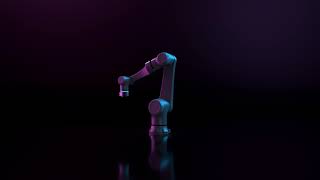


 Multi/General-Purpose Robots
  View All
  Linkedin
 in Sydney, Australia.
Share